
Specialty Pharmacy Regulations & Standards
What You Need to Know
Specialty pharmacies operate in one of the most tightly regulated areas of healthcare. These pharmacies manage medications that are often high-cost, temperature-sensitive, and critical to patient health. That means compliance isn’t optional – it’s essential. Failing to follow cold chain shipping regulations can result in compromised medication integrity, patient harm, financial penalties, and even loss of accreditation or licensure.
Regulatory and accreditation bodies each set standards designed to protect patients, ensure quality handling, and maintain trust in the healthcare system. Below is an overview of the key authorities specialty pharmacies must know – and what’s at stake if requirements aren’t met.
FDA (U.S. Food and Drug Administration)
The FDA establishes strict guidelines for drug safety, packaging, labeling, and efficacy. Specialty pharmacies must ensure that medications are stored, transported, and dispensed in a way that maintains their approved safety and performance.
Non-compliance risks: Product recalls, fines, warning letters, and legal action – along with significant reputational damage.

EMA (European Medicines Agency)
The EMA oversees evaluation, supervision, and safety of medicines across the EU. They set strict requirements for packaging, distribution, and cold chain shipping compliance in Europe. National health authorities in each country can inspect and sanction a pharmacy. (fines, license suspension, or closure).
Non-compliance risks: Fines, licenses suspension or closure after failed inspection by national authority enforcing EMA/European Commission laws.
URAC Accreditation
URAC provides nationally recognized accreditation programs, including specific Cold Chain Requirements. Pharmacies must demonstrate adherence to Good Distribution Practices (GDP), which focus on product safety, risk management, and quality systems throughout the supply chain.
Non-compliance risks: Loss of accreditation, inability to contract with payers, and reduced market credibility.
ACHC (Accreditation Commission for Health Care)
ACHC’s Clinical Pharmacy Accreditation program requires specialty pharmacies to meet rigorous standards, particularly around employee training, cold chain handling, and transportation monitoring. These standards prove a pharmacy is committed to patient safety and best practices.
Non-compliance risks: Accreditation denial or revocation, loss of payer relationships, and exposure to liability claims.
ASHP (American Society of Health-System Pharmacists)
ASHP publishes widely used guidelines covering medication handling, sterile compounding, and specialty pharmacy practices within health systems. Compliance ensures that pharmacists and staff operate under the latest evidence-based standards.
Non-compliance risks: Operational deficiencies, reduced patient trust, and potential disciplinary action within hospital or health-system settings.

ISTA (International Safe Transit Association)
ISTA is not a regulatory agency, but a widely known authority that develops packaging standards to ensure products survive environmental and physical stresses during shipping. For specialty drugs, validated ISTA packaging is ideal to preserve efficacy and prevent costly waste.
Non-compliance risks: Damaged or spoiled products, patient safety issues, increased replacement costs, and violations of payer or manufacturer requirements.
NASP (National Association of Specialty Pharmacy)
NASP promotes education, research, and advocacy to advance specialty pharmacy practices. While not an accrediting body, NASP provides best-practice frameworks and advocacy tools that help pharmacies stay current with evolving industry standards for cold chain shipping requirements.
Non-compliance risks: Falling behind on industry trends, reduced influence in payer and policy discussions, and gaps in staff training.
Packaging Drives Compliance
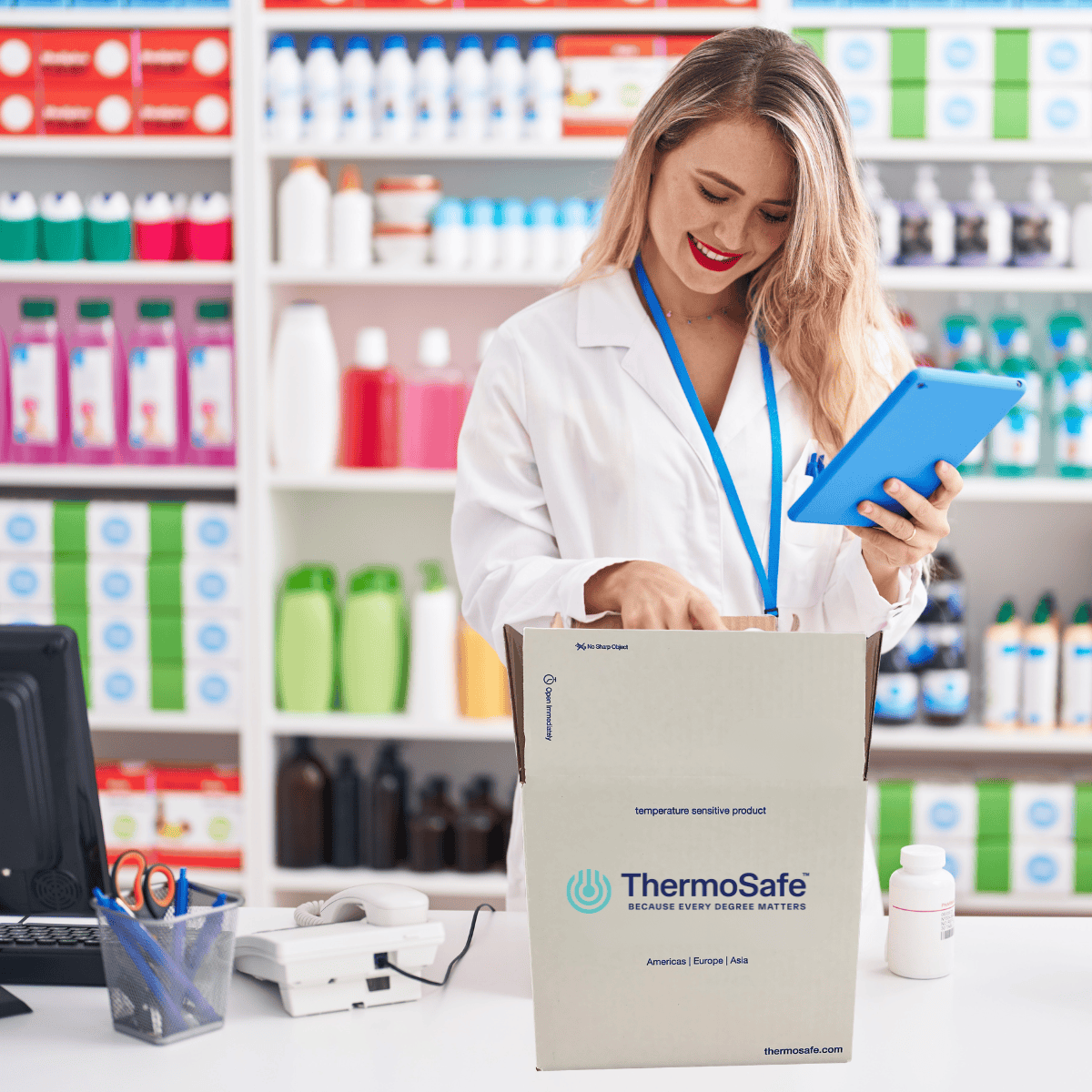
Specialty pharmacies handle biologics and advanced therapies that require certain temperature stability to remain safe and effective. Each medication comes with its own storage and transport specifications – some must be kept frozen, others refrigerated, and still others stable only at controlled room temperature. This means there is no one-size-fits-all solution. Pharmacies must match the drug’s temperature profile to the correct thermal packaging in order to stay compliant with regulatory requirements and protect patient health.
To achieve this, insulated shipping boxes, padded envelopes, and advanced temperature-assurance packaging play a central role in cold chain logistics. By using the right combination of insulation and cooling elements, pharmacies not only meet FDA, EMA, and accreditation standards, but also reduce the risk of product spoilage, costly waste, and compliance violations. Effective thermal packaging isn’t just a support tool – it’s a cornerstone of specialty pharmacy operations.
Explore ThermoSafe’s full range of insulated shippers and temperature-assurance packaging solutions to keep your specialty shipments safe and compliant.